Claw hand is a deformity in which the fingers bend at the middle joints while the knuckles stay pushed back, usually because the small muscles inside the hand have lost their nerve supply, most often from ulnar nerve injury. Early cases may be helped by treating the nerve and using splints, while established claw hand is commonly corrected with tendon transfer or other claw hand surgery. A hand surgeon decides the best option after examining the hand and nerves.
- Claw hand usually results from weakness of the small muscles inside the hand.
- Ulnar nerve injury is the most common cause, sometimes with the median nerve also involved.
- Splints and therapy prevent stiffness while the nerve is given a chance to recover.
- Tendon transfers and related procedures can correct established clawing and improve grip.
Claw hand is a deformity where the fingers curl at the middle and end joints while the knuckles are pushed backwards, giving the hand a claw-like look. It most commonly happens when the small muscles inside the hand lose their nerve supply, usually after an ulnar nerve injury. Claw hand surgery, often using tendon transfers, can correct the posture and improve grip when the nerve does not recover.
This guide explains why clawing happens, how it is assessed, and the treatment options a hand surgeon may discuss.
What is claw hand?
Your fingers are controlled by two groups of muscles. The long muscles in the forearm bend and straighten the fingers. The small muscles inside the hand, called the intrinsic muscles, fine-tune these movements. They bend the knuckles and straighten the middle and end joints at the same time.
When the intrinsic muscles become weak, the long muscles act without balance. The knuckles get pulled backwards and the finger joints curl forwards. This is the classic claw posture.
People with claw hand often notice:
- Difficulty opening the hand fully to hold a large object such as a bottle
- Weak grip and pinch
- Clumsiness with buttons, writing or using a phone
- Wasting of muscles between the thumb and index finger or along the little finger side
- Numbness in the little and ring fingers, if the ulnar nerve is affected
What causes claw hand?
Claw hand is a sign, not a disease in itself. The cause must be found to plan treatment.
Nerve-related causes
- Ulnar nerve injury: The most common cause. A cut at the wrist or elbow, a fracture, or long-standing compression can weaken the ring and little fingers. Read about ulnar nerve injury symptoms and treatment.
- Combined ulnar and median nerve injury: Deep wrist cuts can damage both nerves, causing all four fingers to claw.
- Compression at the elbow: Advanced cubital tunnel syndrome can cause muscle wasting and clawing over time.
- Compression at the wrist: Pressure on the ulnar nerve in Guyon's canal can weaken the intrinsic muscles.
- Brachial plexus injury: Damage to the lower nerve roots near the neck can affect the hand muscles.
- Leprosy (Hansen's disease): Still a recognised cause of nerve damage and clawing in India, treated medically along with hand surgery when needed.
Other causes
- Contractures from burns or scarring
- Some conditions affecting the brain, spinal cord or muscles
- Compartment syndrome after a severe forearm injury
How does a hand surgeon assess claw hand?
The assessment checks three things: the nerve, the muscles and the joints.
Your surgeon will examine which fingers are clawed, test muscle strength and map numb areas. A key test is whether the claw corrects when the knuckles are gently held in a bent position. If the fingers then straighten easily, the joints are still flexible and the hand is usually well suited to surgery.
A nerve conduction study and EMG helps show which nerves are affected and whether any recovery is happening. In some cases ultrasound or MRI is used to look at the nerve.
How is claw hand treated?
Treatment depends on the cause, how long the clawing has been present, and whether the joints are flexible or stiff.
Treating the nerve first
If the nerve has been recently cut or is compressed, repairing or releasing it gives the best chance of the muscles recovering. Timing is important, because the small hand muscles are far from most injury sites and may not survive a long wait. Our article on why timing matters in nerve injury repair explains this.
Splints and hand therapy
While waiting for nerve recovery, a knuckle-blocking splint (sometimes called an anti-claw splint) keeps the knuckles bent. This lets the long tendons straighten the fingers and prevents joint stiffness. Hand therapy keeps the joints mobile and later helps retrain the muscles.
Claw hand surgery
When nerve recovery is not expected, or the clawing is long-standing, claw hand surgery aims to replace the lost action of the intrinsic muscles.
| Procedure | Basic idea | Typically used when |
|---|---|---|
| Tendon transfer | A working tendon is rerouted to bend the knuckles and straighten the fingers | Flexible joints, permanent nerve weakness |
| Static procedures | Tightening tissue in front of the knuckles to stop them over-extending | Selected patients, sometimes combined with transfers |
| Thumb and pinch reconstruction | Tendon transfer to improve pinch or thumb position | Weak pinch along with clawing |
| Joint release or fusion | Loosening or fixing stiff joints | Stiff, fixed deformity |
Tendon transfer is the most widely used dynamic correction. You can read how it works in our guide to tendon transfer surgery for nerve palsy.
What is recovery like after claw hand surgery?
Recovery usually follows a clear sequence, though details vary:
- First 3 to 4 weeks: The hand is protected in a cast or splint so the transferred tendons can heal.
- Weeks 4 to 8: Gentle exercises begin under a hand therapist, learning to use the new tendon pathway.
- Weeks 8 to 12 and beyond: Gradual strengthening and return to daily activities. Heavy use is usually delayed until the surgeon advises.
Many patients find that the brain adapts to the new tendon arrangement within a few weeks of therapy. Commitment to exercises makes a real difference to the final result.
When to see a hand surgeon in Delhi
Seek an assessment if:
- Your fingers have started to curl, especially after a wrist or elbow injury
- You notice wasting of hand muscles or persistent numbness in the little finger
- Clawing has been present for some time and is affecting work or daily life
- You had a nerve repair and the clawing is not improving
Fresh deep cuts to the wrist or forearm should be taken to an emergency department immediately.
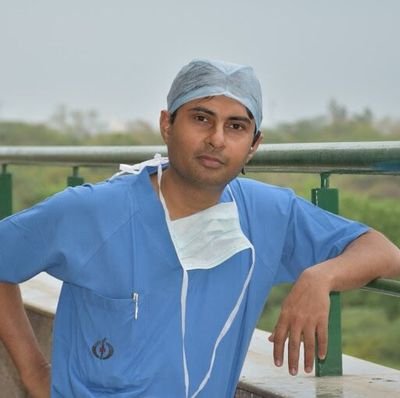
Dr. Anubhav Gupta, Consultant Plastic and Hand Surgeon, treats claw hand and ulnar, median and radial nerve injuries. He consults at Sir Ganga Ram Hospital, Room F-36, Private OPD, Rajinder Nagar (Monday to Saturday, 2 to 4 PM) and at DermaWorld Skin Institute, Rajouri Garden (Monday and Thursday, 6 to 8 PM). Call or WhatsApp +91 99104 69475 to book.
Claw hand surgery works best when the joints are still flexible, so getting assessed earlier rather than later keeps more options open.
Frequently asked questions
Can claw hand be corrected without surgery?
What is the difference between ulnar claw and total claw hand?
Is claw hand surgery done under general anaesthesia?
Will my fingers be fully normal after claw hand surgery?
Request a callback or speak to Dr. Anubhav Gupta's team today.
This article is for general information and is not a substitute for a medical consultation. Every patient's condition is different.