A brachial plexus avulsion is when a nerve root is pulled out of the spinal cord, while a rupture is when the nerve tears outside the spinal cord. A rupture can often be repaired with a nerve graft because the nerve stump is still connected to the spinal cord. An avulsion cannot be directly repaired, so surgeons usually restore function with nerve transfers.
- Avulsion means the nerve root has been pulled out of the spinal cord.
- Rupture means the nerve has torn outside the spinal cord and can often be grafted.
- Avulsions usually need nerve transfers because the original root cannot be reconnected.
- MRI, nerve studies and surgical exploration help tell the two apart.
A brachial plexus avulsion is an injury where a nerve root is pulled out of the spinal cord, while a rupture is a tear of the nerve outside the spinal cord. A rupture can often be repaired with a nerve graft because the stump is still connected to the cord. An avulsion cannot be directly repaired, so surgeons usually restore movement using nerve transfers from other working nerves.
Knowing which type you have helps you understand your treatment plan and what to expect.
What is the brachial plexus?
The brachial plexus is a network of five nerve roots, C5, C6, C7, C8 and T1, that come out of the spinal cord in the neck. They join and branch to form the nerves that control the shoulder, arm and hand.
Each root starts inside the spinal canal, passes through a small opening in the spine and then continues outside towards the arm. Where the injury happens along this path decides whether it is an avulsion or a rupture.
What is a brachial plexus avulsion?
In a brachial plexus avulsion, the nerve root is torn from the spinal cord itself. This is sometimes called a "preganglionic" injury, because it happens before the root reaches a structure called the dorsal root ganglion.
Because the connection to the spinal cord is lost, the nerve cannot be stitched back in a way that restores function. The muscles supplied by that root lose their nerve supply.
Avulsions are more common in high-energy injuries, such as fast bike accidents. They often affect the lower roots (C8 and T1), but any root can be involved.
What is a brachial plexus rupture?
A rupture is a tear of the nerve outside the spinal cord, beyond the dorsal root ganglion. This is called a "postganglionic" injury.
The part of the nerve still attached to the spinal cord remains alive. This means a surgeon can often remove the scarred ends and bridge the gap with a nerve graft, allowing nerve fibres to regrow towards the arm. Our article on nerve graft surgery explains this procedure.
Ruptures are more common in the upper roots (C5 and C6).
What is a stretch injury, and how is it different?
Not every brachial plexus injury is a tear. In a stretch injury, the nerve is pulled but stays in one piece. The signals stop for a while, but the nerve structure is intact.
Mild stretch injuries often recover on their own over weeks to a few months. More severe stretching can damage the inner fibres while leaving the outer sheath intact, and recovery may then be slow or incomplete. Repeated examinations and nerve studies help the surgeon decide whether a nerve is simply stretched or has ruptured or avulsed.
How do avulsion and rupture compare?
| Feature | Avulsion | Rupture |
|---|---|---|
| Where it happens | Root pulled from spinal cord | Nerve torn outside spinal cord |
| Medical term | Preganglionic | Postganglionic |
| Can it recover on its own? | No | Usually not fully |
| Direct repair possible? | No | Often, with nerve graft |
| Main surgical option | Nerve transfer | Nerve graft, sometimes plus transfers |
| Pain | Severe burning pain is common | Pain varies |
| Common roots | Often lower roots, but any | Often upper roots |
Many patients have a combination, for example ruptured upper roots with avulsed lower roots.
What signs suggest a brachial plexus avulsion?
Some clinical signs point towards avulsion rather than rupture:
- Drooping eyelid and small pupil on the same side (Horner's syndrome), suggesting T1 root avulsion
- Winging of the shoulder blade, as the nerve to that muscle leaves very close to the spine
- Weak diaphragm, from injury near the C5 root
- Severe burning pain in a numb arm
- Absence of Tinel's sign (tingling when tapping over the nerve in the neck)
These signs are helpful but not conclusive. Read our guide on brachial plexus injury symptoms for a wider list.
How do doctors tell them apart?
Diagnosis usually involves several steps:
- Clinical examination of each muscle group and areas of sensation
- MRI of the neck and brachial plexus, which may show empty root sleeves or fluid pockets (pseudomeningoceles) that suggest avulsion
- Nerve conduction studies and EMG, which can show patterns typical of avulsion, such as preserved sensory signals in a numb area
- Surgical exploration, where the surgeon directly sees and tests the nerves
Our article on MRI, EMG and NCV tests for brachial plexus injury explains these tests in more detail.
How is each type treated?
Treating a rupture
The surgeon removes the damaged section and places nerve grafts between the healthy stump and the nerve further down. Nerve fibres then grow through the graft over months.
Treating an avulsion
Because the root cannot be reconnected, the surgeon borrows working nerves from elsewhere. Common donors include the spinal accessory nerve, nerves to the rib muscles, or small branches of nerves in the arm. Our simple guide to nerve transfer surgery explains how this works.
When surgery is late
If the injury is more than about a year old, muscles may no longer respond to new nerve supply. Options such as free functioning muscle transfer or tendon transfers may still help.
When to see a hand surgeon in Delhi
If you have a weak or paralysed arm after an accident, especially with burning pain or a drooping eyelid, see a brachial plexus surgeon early. Early diagnosis of avulsion or rupture allows surgery to be planned within the ideal window, usually within three to six months.
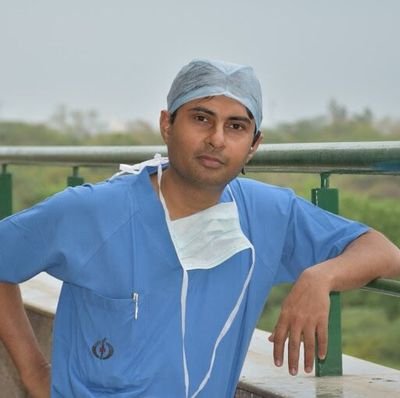
Dr. Anubhav Gupta is a Consultant Plastic and Hand Surgeon at Sir Ganga Ram Hospital, New Delhi, and a member of the Brachial Plexus Surgeons Group of India. He consults at Sir Ganga Ram Hospital, Rajinder Nagar (Room F-36, Private OPD, Mon–Sat, 2–4 PM) and at DermaWorld Skin Institute, Rajouri Garden (Mon and Thu, 6–8 PM). For appointments, call or WhatsApp +91 99104 69475.
Bring your MRI films and nerve study reports to the consultation. These are key to confirming whether you have a brachial plexus avulsion, a rupture or both.
Frequently asked questions
Can a brachial plexus avulsion heal on its own?
Is avulsion worse than rupture?
Can an MRI confirm avulsion?
Why does avulsion cause so much pain?
Request a callback or speak to Dr. Anubhav Gupta's team today.
This article is for general information and is not a substitute for a medical consultation. Every patient's condition is different.