A paralysed or numb arm after a bike accident is often caused by a brachial plexus injury, where the nerves from the neck to the arm are stretched, torn or pulled from the spinal cord. Some stretch injuries recover on their own, but tears and avulsions usually need nerve surgery, ideally within three to six months. An early specialist assessment is the most important step.
- Two-wheeler accidents are the commonest cause of brachial plexus injury in young adults.
- The arm may be partly or completely paralysed, numb or painful after the fall.
- MRI and nerve studies at around three to four weeks help decide whether surgery is needed.
- Do not wait many months for natural recovery; nerve surgery has a time window.
If your arm is paralysed or numb after a bike accident, a brachial plexus injury is one of the most likely causes. This happens when the nerves between the neck and the shoulder are stretched, torn or pulled from the spinal cord in the fall. Some stretch injuries recover on their own, but more serious ones usually need nerve surgery within three to six months, so early assessment by a nerve specialist is important.
Many patients and families are told to simply wait. Understanding what has happened helps you ask the right questions at the right time.
How does a bike accident injure the brachial plexus?
The brachial plexus is a network of nerves that start in the neck and supply the whole arm. In a typical two-wheeler fall, the rider lands on the point of the shoulder while the head is thrown sideways in the opposite direction.
This sudden pull stretches the nerves like a rope. Depending on the force, the nerves may be:
- Stretched but intact, often recovering in weeks to months
- Partly damaged inside, with slow or incomplete recovery
- Torn (ruptured) outside the spinal cord
- Pulled out (avulsed) from the spinal cord itself
A brachial plexus injury after a bike accident often involves a mix of these at different nerve roots. Our article on brachial plexus avulsion vs rupture explains the difference.
What symptoms do people notice?
Symptoms usually start immediately, though they may be missed at first if there are other serious injuries. Common signs are:
- The arm hangs limp and cannot be lifted
- Inability to bend the elbow or move the fingers
- Numbness in part or all of the arm
- Burning, shooting or crushing pain
- A drooping eyelid on the same side, in some cases
For a full list, see our guide to brachial plexus injury symptoms.
What other injuries happen at the same time?
High-energy bike accidents often cause more than one injury. Doctors usually check for:
- Head injury
- Fractures of the neck, collarbone, shoulder blade, upper arm or ribs
- Shoulder dislocation
- Injury to the main artery of the arm (subclavian or axillary artery)
- Chest injuries
Life-threatening injuries are treated first. After any serious road accident, go to an emergency department immediately, especially if the hand is cold or pale, there is heavy bleeding, or there is neck pain.
What tests are needed?
Once you are stable, the nerve injury is assessed with a combination of examination and tests.
| Test | What it shows | Usual timing |
|---|---|---|
| Clinical examination | Which muscles work and where feeling is lost | First visit, then repeated |
| X-ray / CT | Fractures of neck, shoulder, collarbone, ribs | At the time of injury |
| MRI of neck and plexus | Root avulsions, swelling, nerve continuity | Often a few weeks after injury |
| Nerve conduction study and EMG | Nerve function and early signs of recovery | Usually from about 3–4 weeks |
Repeating the examination over time is important. A muscle that starts to flicker is a good sign that the nerve is recovering.
Does every brachial plexus injury need surgery?
No. Many partial injuries recover without an operation. However, if there are signs of avulsion, a complete paralysis, or no recovery after about three months, surgery is often recommended.
Surgical options include:
- Nerve grafting, where a gap in a torn nerve is bridged with a donor nerve, often taken from the leg
- Nerve transfer, where a working nerve is redirected to power a paralysed muscle. Read our guide on nerve transfer surgery
- Muscle or tendon transfers, used when the injury is old or nerve surgery has not been enough
The aim is usually to restore the most important movements first, such as elbow bending and shoulder stability, and then hand function where possible.
Why is timing so important?
Muscles that lose their nerve supply slowly waste away. After roughly 12 to 18 months, they may not recover even if a nerve finally reaches them. Nerves also regrow slowly, at about 1 mm a day.
For this reason, waiting too long reduces the options. A common approach is:
- Emergency treatment of life-threatening and limb-threatening injuries
- Physiotherapy to keep joints supple from the early weeks
- Specialist nerve assessment and tests at around three to four weeks
- Surgery, if needed, typically within three to six months
Even if you are past this window, it is still worth an assessment. Late options exist, such as functioning muscle transfers.
What does recovery look like?
Recovery after a brachial plexus injury from a bike accident is slow and gradual. After nerve surgery, the first movement may take several months to appear, and strength continues to build for one to two years or more.
Physiotherapy is a key part of recovery. It keeps joints flexible, strengthens recovering muscles and helps the brain learn to use new nerve connections. Our brachial plexus injury recovery timeline gives a month-by-month picture.
Many people return to work and daily life, sometimes with changes to their job or routine. Outcomes vary with the severity of the injury, age and timing of treatment.
When to see a hand surgeon in Delhi
See a hand or brachial plexus surgeon if your arm is weak, numb or painful after a bike or road accident and it has not clearly improved within a few weeks. Do not wait many months for natural recovery. Our article on arm weakness after a road accident lists practical next steps.
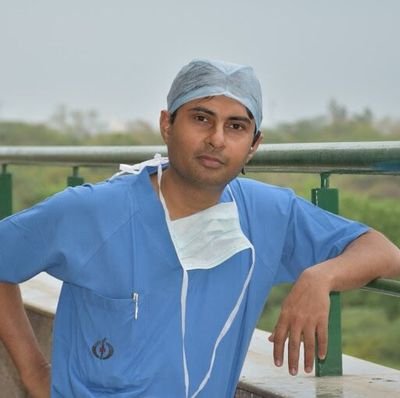
Dr. Anubhav Gupta is a Consultant Plastic and Hand Surgeon at Sir Ganga Ram Hospital, New Delhi, and a member of the Brachial Plexus Surgeons Group of India. He consults at Sir Ganga Ram Hospital, Rajinder Nagar (Room F-36, Private OPD, Mon–Sat, 2–4 PM) and at DermaWorld Skin Institute, Rajouri Garden (Mon and Thu, 6–8 PM). Call or WhatsApp +91 99104 69475 for an appointment.
Bring your accident discharge summary, X-rays, MRI and nerve study reports so the assessment can be completed quickly.
Frequently asked questions
Why does a bike accident damage the arm nerves?
Will wearing a helmet prevent a brachial plexus injury?
Should I get surgery immediately after the accident?
Can I ride again after a brachial plexus injury?
Request a callback or speak to Dr. Anubhav Gupta's team today.
This article is for general information and is not a substitute for a medical consultation. Every patient's condition is different.