There is no single brachial plexus surgery success rate, because results depend on the type of injury, the time between injury and surgery, the patient's age and health, the movements being restored and the rehabilitation that follows. In general, shoulder and elbow function are restored more reliably than hand function, and surgery within the first three to six months tends to give better results.
- Success depends on many factors, so a single percentage can be misleading.
- Earlier surgery, usually within three to six months, tends to give better results.
- Elbow bending and shoulder stability are generally more predictable than hand function.
- Committed physiotherapy for one to two years is a major part of the outcome.
Patients often ask about the brachial plexus surgery success rate, but there is no single number that applies to everyone. Results depend on the type of injury, how soon surgery is done, the patient's age and health, the movements being restored and the rehabilitation that follows. In general, restoring shoulder and elbow movement is more predictable than restoring hand function, and surgery within the first three to six months tends to give better results.
Understanding these factors helps set realistic expectations and shows what you can influence.
Why is there no single brachial plexus surgery success rate?
The brachial plexus has five nerve roots, and each injury damages them differently. One patient may have a mild stretch of two roots, while another has three roots pulled out of the spinal cord.
Different operations are also used for different goals. Restoring elbow bending with a nerve transfer is a very different task from restoring finger movement in a total plexus injury. Grouping all of these into one percentage would be misleading.
A better question to ask your surgeon is: "For my injury, which movements are likely to improve, and by how much?"
How does the type of injury affect the outcome?
The nature of the nerve damage is one of the biggest factors.
| Injury type | General outlook |
|---|---|
| Stretch (neuropraxia) | Often recovers well without surgery |
| Partial internal damage | Variable; may recover partly on its own |
| Rupture outside the spinal cord | Can often be repaired with nerve grafts |
| Root avulsion from the spinal cord | Cannot be directly repaired; relies on nerve transfers |
| Upper plexus (C5–C6) | Generally better outlook for useful function |
| Total plexus (C5–T1) | Harder; priorities are set carefully |
Our article on brachial plexus avulsion vs rupture explains why this difference matters so much.
Why does timing matter so much?
When a muscle loses its nerve supply, it begins to waste. The connection points between nerve and muscle (motor end plates) gradually break down. After roughly 12 to 18 months, the muscle may not respond even if a new nerve reaches it.
Nerves also regrow slowly, at about 1 mm a day. The longer the distance from the repair to the muscle, and the later the surgery, the less time is left for the muscle to be "rescued".
For closed injuries, specialists usually assess at three to four weeks and operate, if needed, within three to six months. Late presentation narrows the options, though procedures such as free muscle transfers can still help.
What patient factors make a difference?
Several personal factors also influence recovery:
- Age: children and younger adults generally regenerate nerves better than older adults
- General health: diabetes and poor nutrition can slow healing
- Smoking: reduces blood flow and is generally harmful to nerve recovery
- Associated injuries: fractures, blood vessel injuries or head injuries can complicate recovery
- Body weight and fitness: affect how well recovering muscles can lift the arm
- Motivation and support: recovery is long, and family support helps people stay on track
Some of these, such as smoking and blood sugar control, are things you can actively improve.
Which movements recover best?
Surgeons usually prioritise movements in order of importance and likely success.
- Elbow bending: lets you bring the hand to the mouth; often a top priority
- Shoulder stability and movement: helps position the arm and reduces pain from a hanging shoulder
- Wrist and finger movement: harder to restore, especially in adults with lower root injuries
- Protective sensation in the hand: helps prevent burns and injuries
Techniques such as nerve transfer surgery have improved results for shoulder and elbow function, because the new nerve supply is placed close to the target muscle.
How much does surgical planning matter?
A careful plan, based on examination, MRI and nerve studies, is central to a good result. Points your surgeon will consider include:
- Which roots are available as donors and which are avulsed
- Whether grafts, transfers or both are best for each movement
- The condition of the muscles and joints at the time of surgery
- Whether a later secondary procedure is likely to be needed
Surgery is performed with microsurgical techniques and magnification, because the nerves are very small and delicate.
How is "success" measured?
Surgeons usually measure success by the strength of specific movements rather than by a general feeling of improvement. Muscle power is often graded on a simple scale from 0 (no movement) to 5 (normal strength). A key milestone is grade 3, which means the muscle can move the joint against gravity, for example lifting the hand to the mouth.
Success also includes practical goals: less pain, a more stable shoulder, being able to dress or eat independently, and returning to work or study. Discussing these personal goals with your surgeon helps set realistic expectations.
What role does rehabilitation play?
Surgery creates the pathway, but rehabilitation helps the arm use it. Physiotherapy keeps joints supple while waiting for nerves to arrive, then strengthens weak muscles and retrains the brain to use new connections.
This phase often lasts one to two years or more. Patients who keep up regular exercises at home usually make the most of the recovery their nerves allow. Our guide to physiotherapy after brachial plexus surgery covers what to expect, and our recovery timeline explains typical milestones.
When to see a hand surgeon in Delhi
If you have arm weakness, numbness or pain after an accident or birth injury, see a brachial plexus surgeon early, ideally within the first few weeks. Early assessment keeps the widest range of options available and gives the best chance of a good result.
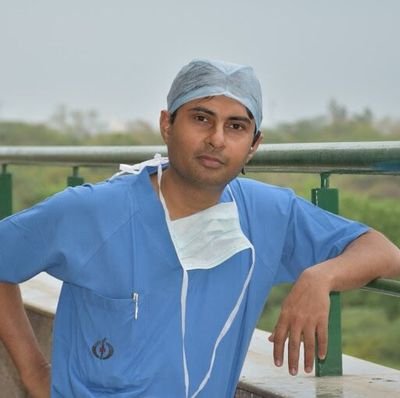
Dr. Anubhav Gupta is a Consultant Plastic and Hand Surgeon at Sir Ganga Ram Hospital, New Delhi, and a member of the Brachial Plexus Surgeons Group of India. He consults at Sir Ganga Ram Hospital, Rajinder Nagar (Room F-36, Private OPD, Mon–Sat, 2–4 PM) and at DermaWorld Skin Institute, Rajouri Garden (Mon and Thu, 6–8 PM). Call or WhatsApp +91 99104 69475 for an appointment.
At the consultation, ask which movements are realistically expected to improve in your case. That is more useful than any general brachial plexus surgery success rate.
Frequently asked questions
Can brachial plexus surgery restore a completely normal arm?
How will I know if my surgery has worked?
Does smoking affect nerve recovery?
What if the first surgery does not give enough recovery?
Request a callback or speak to Dr. Anubhav Gupta's team today.
This article is for general information and is not a substitute for a medical consultation. Every patient's condition is different.